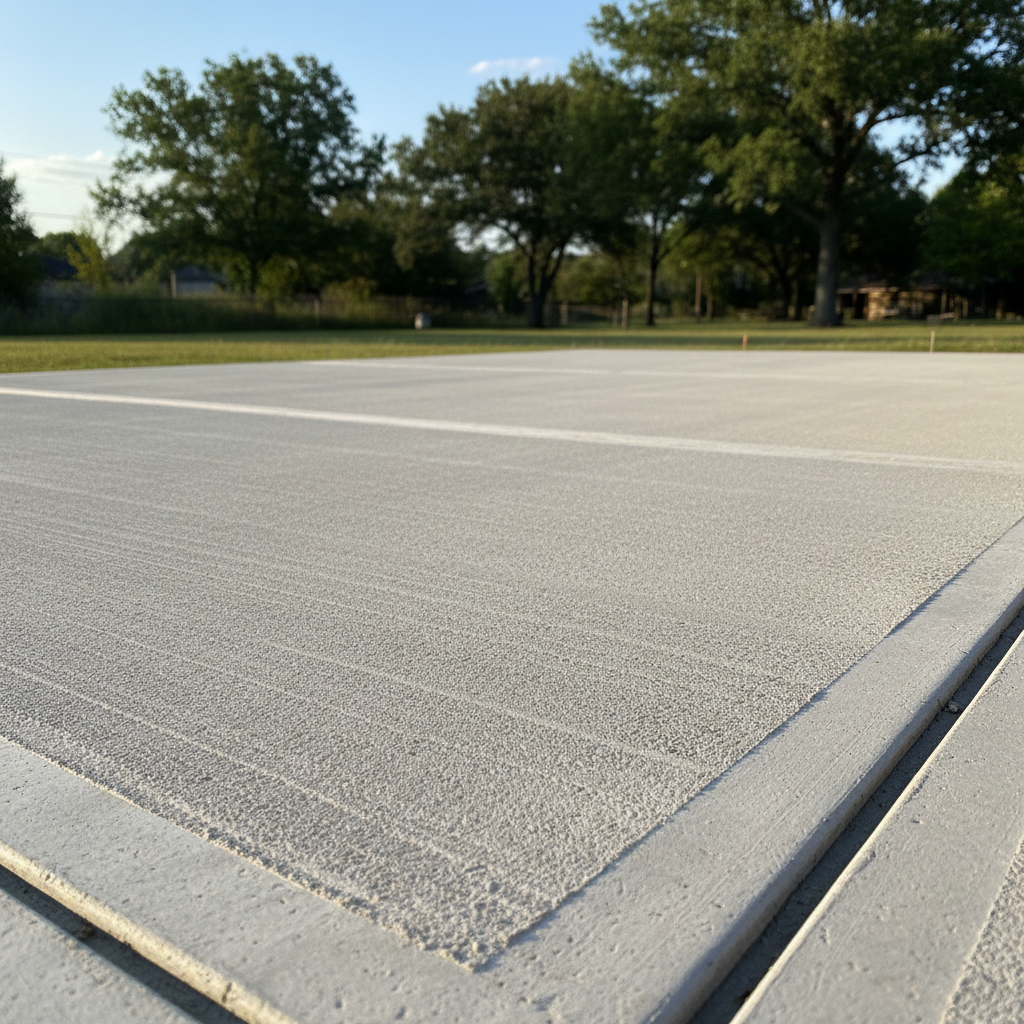
So, you're thinking about adding some concrete flatwork around your place here in Waco, huh? Maybe a new patio for those summer BBQs, or a sturdy shed foundation. Or perhaps a fresh walkway that doesn't look like it's seen better days (because, let's be honest, it has). This is a pretty common project, and a lot of folks wonder what they can tackle themselves. They also wonder when it's time to bring in someone like us at Resilient Concrete Waco.
Before You Even Think About Mixing Cement
First off, you've got to plan. What exactly is this concrete for? How big will it be? Where, specifically, is it going? These aren't just random questions; they pretty much decide everything, from the materials you'll need right down to whether you need a permit. Oh yeah, permits. For anything substantial, especially if it's connected to your house or might mess with drainage, you'll probably need one from the City of Waco. Seriously, don't skip this step. It can save you a ton of headaches later.
Next, think about the ground. Here in Waco, we've got that notorious expansive clay soil. It swells when it gets wet and shrinks when it dries out, which can be a real pain for concrete. This means proper site preparation isn't just a good idea; it's absolutely critical. You'll need to clear the area, get rid of any organic stuff, and compact that subgrade. If you're just doing a small, non-structural pad, you might be able to handle the clearing and basic leveling yourself. But for anything bigger, or if you're dealing with serious changes in elevation, you'll probably want some professional advice on how to prep that soil just right.
Drainage is another huge one. Where's the water going to go when it rains? You definitely don't want it pooling against your house or running off into your neighbor's yard. A slight slope, usually about 1/8 to 1/4 inch per foot, is essential. This is where a lot of DIY projects go wrong. Getting that slope consistent and correct across a larger area is way harder than it looks.
During the Pour: When to DIY, When to Call a Pro
Okay, let's talk about the pour itself. For really small projects, like a stepping stone path or a little pad for a garbage can, you can absolutely buy bags of ready-mix concrete and do it yourself. You'll need a wheelbarrow, a shovel, a couple of 2x4s for screeding, and a float. Mix small batches, pour, level, and then finish it up. It's tough work, but totally doable for something that's maybe 10-20 square feet.
But what if you're talking about a 10x10 patio, or a driveway extension? Now you're dealing with quantities where ready-mix bags become impractical and, frankly, expensive. You'll need a concrete delivery truck. And when that truck shows up, you've got a limited window – usually an hour or two – to get that concrete out, leveled, and finished before it starts to set. This is where the DIY dream often turns into a nightmare, believe me.
Pouring concrete isn't just about dumping it out. You need to:
- Build your forms perfectly square and level (or sloped, if that's the plan).
- Have rebar or wire mesh in place for strength, especially with our shifting Waco soils.
- Know how to screed the concrete to the right height.
- Bull float it to bring up the cream and smooth the surface.
- Edge and groove it properly to control cracking.
- And then, you've got to finish it – maybe a broom finish for grip, or a smooth trowel finish if that's what you're after.
Each of these steps requires skill, speed, and the right tools. If you've never done it before, trying to learn on a 200-square-foot slab with a truckload of concrete setting up fast is a recipe for disaster. You'll end up with an uneven, ugly slab, and you'll have wasted a lot of money on materials. For anything beyond a very small, non-critical pad, I'm telling you, call a pro. We've got the crew, the tools, and the experience to get it done right the first time. It'll save you money and stress in the long run.
After the Concrete is Poured: Curing and Care
So, you've got your new concrete. Whether you did it yourself or hired us, the work isn't over. Curing is probably the most overlooked part of concrete flatwork, and it's absolutely vital for strength and durability. Concrete doesn't just dry; it cures through a chemical reaction. This process needs moisture.
For at least the first 7 days, and ideally 28 days, you need to keep that concrete moist. This means regular watering, especially during our hot Waco summers. You can also use curing compounds, which we often apply, or cover it with plastic sheeting. Don't drive on it or put heavy loads on it for at least a week, and ideally wait 28 days for full strength. Patience here pays off big time.
After it's fully cured, regular cleaning will help keep it looking good. If you're worried about stains or want extra protection, you can apply a sealer. This is something you can definitely do yourself. Just make sure the concrete is clean and dry before you apply it, and follow the manufacturer's instructions.
Look, I get it. Everyone wants to save a buck. And for some small projects, DIY concrete flatwork is totally achievable. But for anything that's going to be a permanent, visible, or structural part of your home, you're better off letting the experts handle it. That's why folks call Resilient Concrete Waco. We do this every day, and we'll make sure your concrete is built to last.